
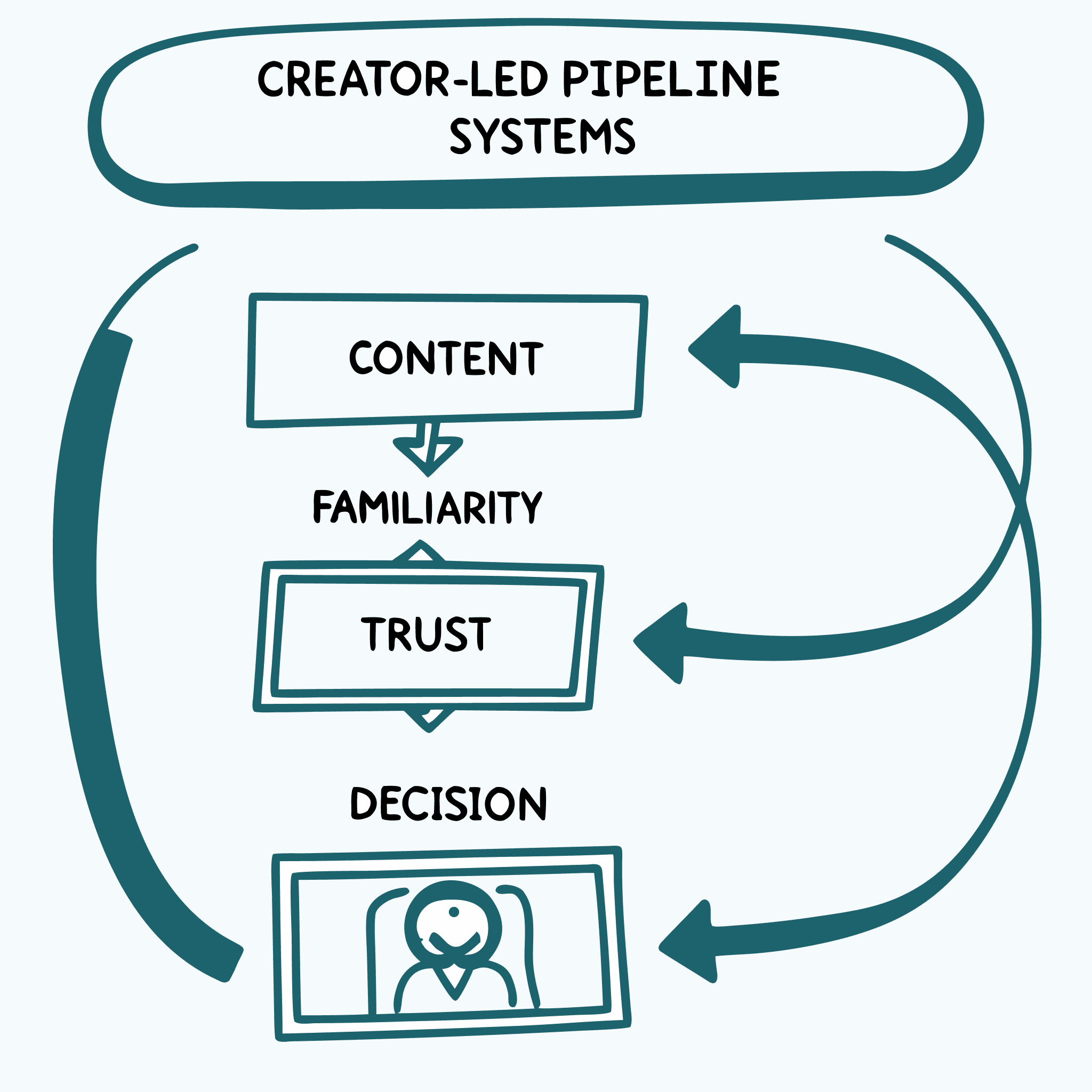
1. Rethinking Pipeline
1.1 The real problem isn't your content
When pipeline slows, the default response is tactical: post more, run a campaign, try creators. These are not wrong, they are just answers to the wrong question.
Pipeline is not something you generate in the moment. It is something that emerges over time, as a result of accumulated perception, familiarity, and trust.
This distinction changes everything. If you believe pipeline is immediate, you optimize for lead volume and quick conversions. If you understand it as delayed, you start optimizing for memory, trust, and repeated exposure.
- Chasing growth: Short-term spikes, campaign-by-campaign, no compounding
- Building a system: Each effort builds on the last, trust deepens over time
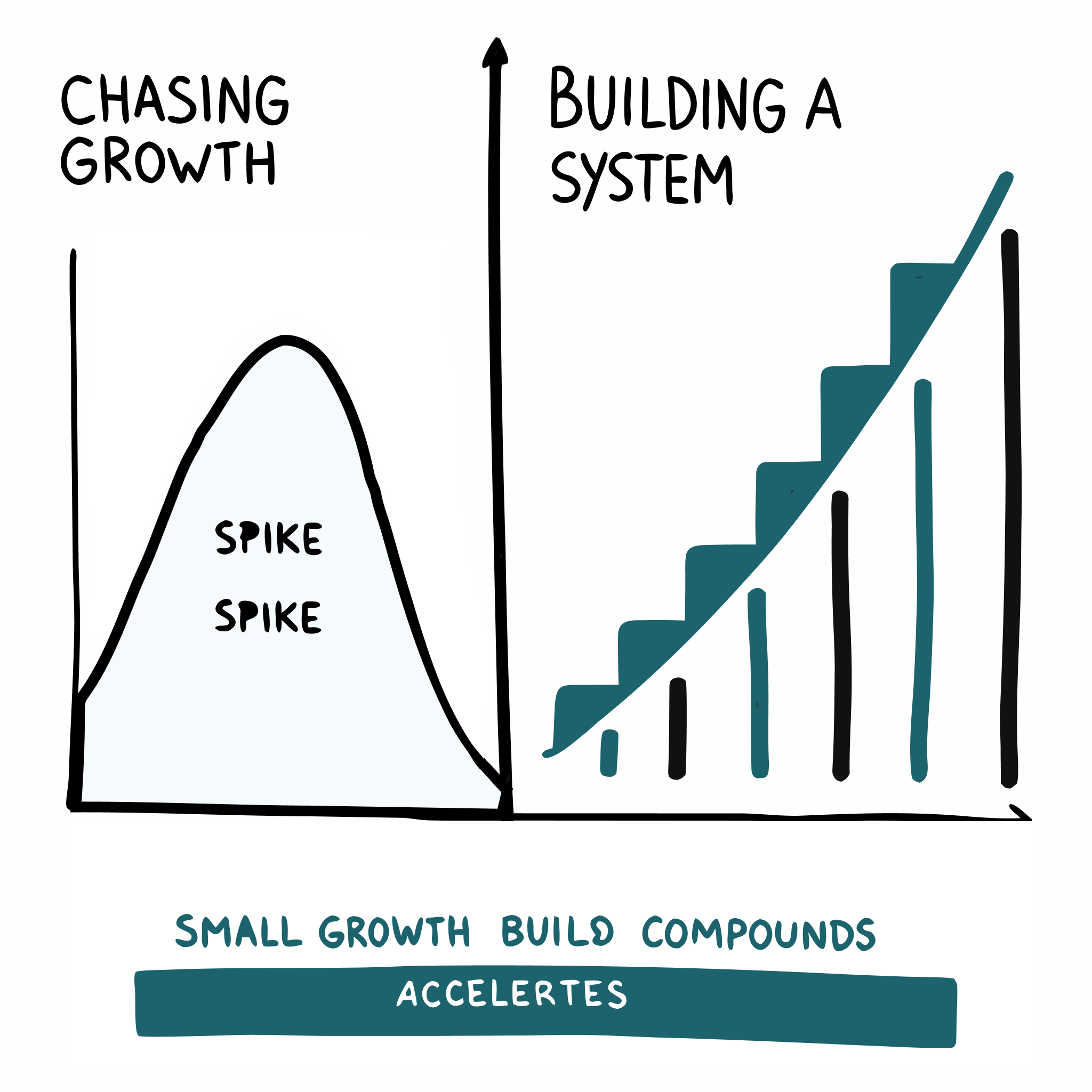
The shift from "how do we get more leads this quarter?" to "how do we shape how buyers think before they're ready?" is the most important strategic reframe in modern B2B growth.
This course is about making that shift, not just conceptually, but structurally.
1.2 Pipeline as a delayed outcome
To fix your strategy, you need to understand how B2B buying decisions actually form. They are not impulsive. They are high-stakes, multi-layered, and often involve several stakeholders over weeks or months.
A buyer might first encounter an idea like outbound not working the way it used to. At that moment they are not looking to buy. But a seed is planted. Over the following weeks they encounter similar ideas from different creators, in different formats, across different contexts.
- They begin questioning their existing tools
- They notice inefficiencies they previously couldn't name
- They develop a mental model of the problem
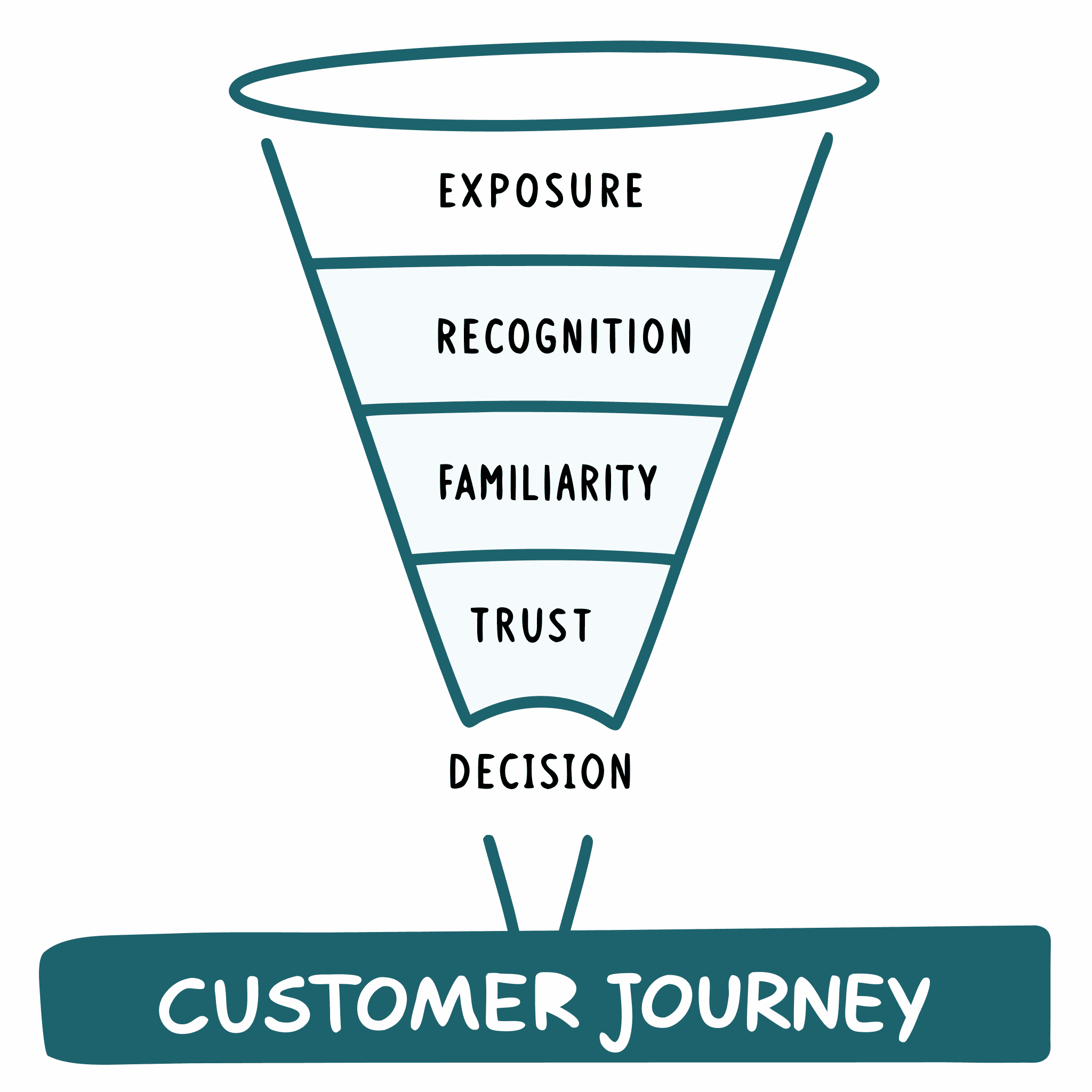
Pipeline is not created at the point of conversion. It is created in the period leading up to it.
If you are not present during the pre-decision period, you are competing at a massive disadvantage even if your product is better. Your job is to be part of that invisible influence.
2. The 95/5 Framework
2.1 Why most of your market is ignoring you
At any given point, the vast majority of your addressable market is not actively looking to buy. Multiple studies converge on a similar pattern: roughly 5% is in-market at any moment. The other 95% is not currently evaluating solutions.
- You compete in the most crowded, expensive space
- You fight over limited, already-formed demand
- You're forced into aggressive tactics like discounts, outbound pressure, and endless ads
The most valuable marketing does not capture demand. It shapes future demand.
If your brand shows up before buyers are ready, you influence what they look for, how they evaluate options, and who they consider. That is where the real compounding advantage comes from.
3. Trust as Infrastructure
3.1 Why brands start at a disadvantage
No matter how good your product is, your brand carries a structural disadvantage in buyer perception. Buyers assume bias. Brand messaging feels promotional. Claims are treated with skepticism by default, not because of what you say, but because of who is saying it.
Creators are followed voluntarily. They are trusted for their perspective, not their sponsorship. They are perceived as closer to the actual problem practitioners, not marketers.
- When a creator describes a failure, it feels real
- When they frame a problem, it shapes how their audience sees it
- When they explore a solution space, that exploration carries weight
Creators have built credibility over time. When they engage with your problem space, that credibility transfers to the framing and eventually to your product. This is the core of why creator-led pipeline works.
3.2 Alignment, not control
This is where most companies make the critical mistake. Presented with the opportunity to work with trusted creators, they immediately try to control the output: scripted messaging, brand-approved talking points, exact language requirements.
In doing so, they strip away the very thing that made the creator valuable: authenticity.
- The problem you're addressing together
- The audience you both care about
- The intent behind the content
The right approach is not control, it is alignment.
Ask yourself: if you removed your product from this content entirely, would the creator still make it? If yes, you have alignment. If no, you have a sponsored post.
4. Content That Drives Decisions
4.1 Attention vs. decision confidence
Even with the right creators, most teams still optimize for the wrong thing: hooks, virality, engagement. These metrics are real but they measure attention, not influence.
Attention is easy to get. Decision confidence is not.
A buyer does not act because your content was interesting. They act because your content helped them understand their problem more clearly, feel confident in a direction, and reduce uncertainty about the outcome.
- Reframe a problem in a way the buyer had not considered
- Expose why existing approaches fail in practice
- Help the buyer evaluate options with clarity
- Demonstrate proof in a way that feels specific and credible
This type of content is not always viral. But it performs where it matters in influencing decisions.
5. Systems Over Campaigns
5.1 Why campaign thinking limits growth
At this stage, many teams start implementing creator collaborations and better content but they still operate within a limiting structure: campaigns.
Campaigns start, peak, and end. They can create visibility, but they cannot create consistency. And pipeline does not come from moments of visibility. It comes from sustained presence.
- Without a system, every effort resets from zero
- With a system, every effort builds on the last
A system is always active, continuously reinforcing, designed to compound over time.
Moving from 'what's our next campaign?' to 'how does our system operate this week?' is structural, not cosmetic. It changes hiring, content calendars, creator relationships, and measurement all at once.
5.2 Distribution as reinforcement
Distribution is commonly understood as a top-of-funnel activity: more reach, more impressions, more eyeballs. But in a system designed to build pipeline, the goal is different.
It is to ensure that the right people see the same idea multiple times. Because memory, not exposure, drives action.
- In a creator's organic post
- In the founder's own voice
- Referenced in a sales conversation
- In a different format such as video, article, or short clip
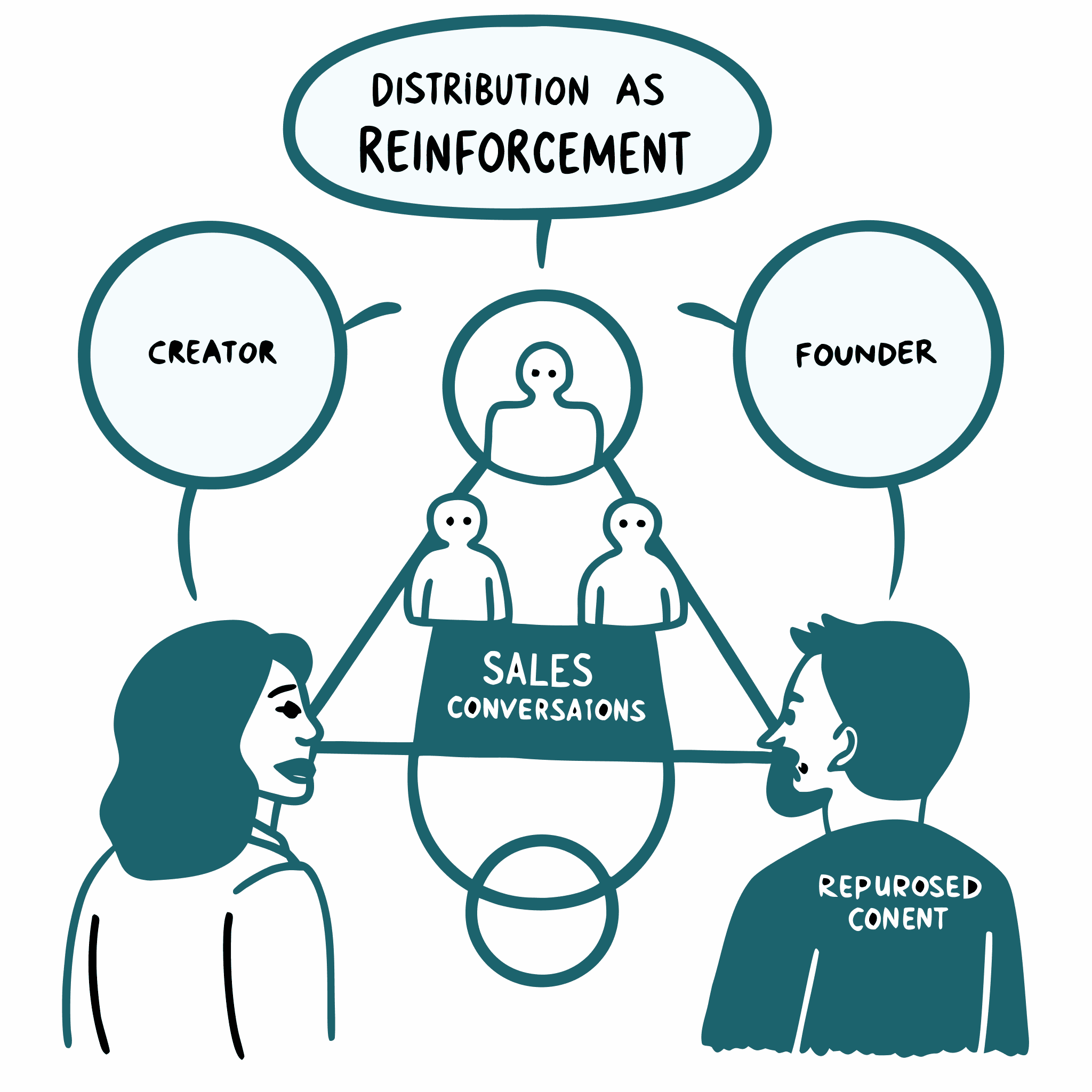
The same core idea should appear across multiple contexts not because you need more content, but because you need stronger recall.
Optimizing for unique reach is a vanity metric in this context. The metric that matters is frequency among your ICP: how many times has the right person encountered your core idea?
6. Measuring What Matters
6.1 Shifting from activity to influence
If your measurement framework tracks impressions, clicks, and engagement, you will optimize for attention. And attention, as we have established, is not the goal. Influence is.
- Are the right people engaging or just large numbers of people?
- Are prospects already familiar with your framing when they enter conversations?
- Are deals moving faster than they used to?
- Are common objections decreasing over time?
These are harder to quantify but far more meaningful, because they reflect what actually drives pipeline.
Ask your sales team: "When you mention X idea or framing, do prospects already know what you're talking about?" If yes, your system is working. Track how that number changes over time.
Where Bannermen Fits In
Understanding this model is one thing. Building it consistently is another.
Once you move from campaigns to systems, the complexity increases quickly: finding creators who actually influence your ICP, shaping content that builds decision confidence, ensuring distribution reinforces ideas instead of publishing once and moving on, and connecting all of this back to pipeline rather than vanity metrics.
Most teams either oversimplify this into creator campaigns or abandon it when results are not immediate.
Bannermen exists to bring structure to this shift.
We help you identify the right creators already trusted by your market, design content that shapes how buyers think, and build distribution systems that reinforce those ideas over time, so you move from scattered efforts to a pipeline system that actually compounds.
Why This Approach Works
If you are selling into a defined B2B audience, this approach removes a lot of the guesswork that usually slows down growth.
Instead of relying on assumptions or isolated campaigns, you start seeing:
- What your buyers are already thinking before they enter the market
- Which problems resonate deeply enough to influence decisions
- Which creators and voices your audience already trusts
- What kind of content actually reduces uncertainty and drives action
Final Thought
Creator-led distribution is not something you try once. It is something you build into your growth system. Companies that approach it this way do not just get more visibility; they build stronger market perception, faster sales cycles, and a more predictable pipeline over time.
If you have built something valuable but struggle to consistently get the right people to notice, understand, and trust it, this is where the shift happens.
Instead of chasing demand, you start shaping it.
- Clear signals on what influences buyer decisions
- Access to creators your audience already listens to
- A system that reinforces ideas instead of resetting every campaign
- No scattered experiments and no dependence on short-term spikes
Next step
Everything is designed to compound.
At Bannermen, we help B2B teams design and run creator-led pipeline systems end-to-end, focused not just on visibility, but trust, influence, and revenue.
If you’re building in a high-growth category and want to make your pipeline more predictable, you can also reach us at anjali@getbannermen.com.
Book a call