

Why most teams get creator-led distribution wrong
Most companies do not fail at creator-led distribution because it does not work. They fail because they treat it like ads, run one-off posts, track impressions, and expect immediate ROI. When that does not happen, they assume the channel is broken.
But creator-led distribution is not a campaign. It is a system built on trust, context, and repetition.
Across early-stage and growth-stage companies, we consistently see the same pattern: creator-led distribution works when it is structured and fails when it is treated like a campaign.
Week 1: Getting the Foundation Right
Start with the Problem, Not the Creators
Most teams begin by searching for creators. It creates the illusion of progress, but it is the wrong starting point. Without clarity on who you are trying to influence and why, even the best creators will not drive meaningful outcomes.
What matters is identifying when your audience actually cares, when your product becomes relevant in their workflow, or frustration. Creator-led distribution works when it meets intent, not when it interrupts.
Once this is clear, everything else, creators, messaging, and measurement, starts to align.
Define One Clear Outcome
Many teams try to measure views, likes, engagement, clicks, and conversions all at once. This creates noise instead of insight, making it difficult to understand what is actually working.
Creator-led distribution works best when anchored to a single outcome, whether that is demo requests, signups, or qualified inbound. Supporting signals like comments and profile visits matter, but only when they connect back to that goal.
Without this clarity, teams end up optimizing for visibility instead of impact.
Understand the Trust Layer
Two creators can look similar on paper, same audience size and same niche, but produce completely different results. The difference is trust, and it is often underestimated.
Trust shows up in how audiences engage, the depth of conversations, and how seriously people take the creator's perspective. Brands that overlook this tend to generate attention without intent, and in creator-led distribution, attention alone does not convert.
Week 2: Choosing the Right Creators
Relevance Will Always Beat Reach
Optimizing for reach is one of the most common and costly mistakes. Large audiences look effective on the surface, but they rarely translate into meaningful results without relevance.
A smaller creator who speaks directly to your ICP will almost always outperform a larger, broader creator. Especially in B2B or high-consideration products, what matters is not how many people see the content, but how many of the right people care about it.
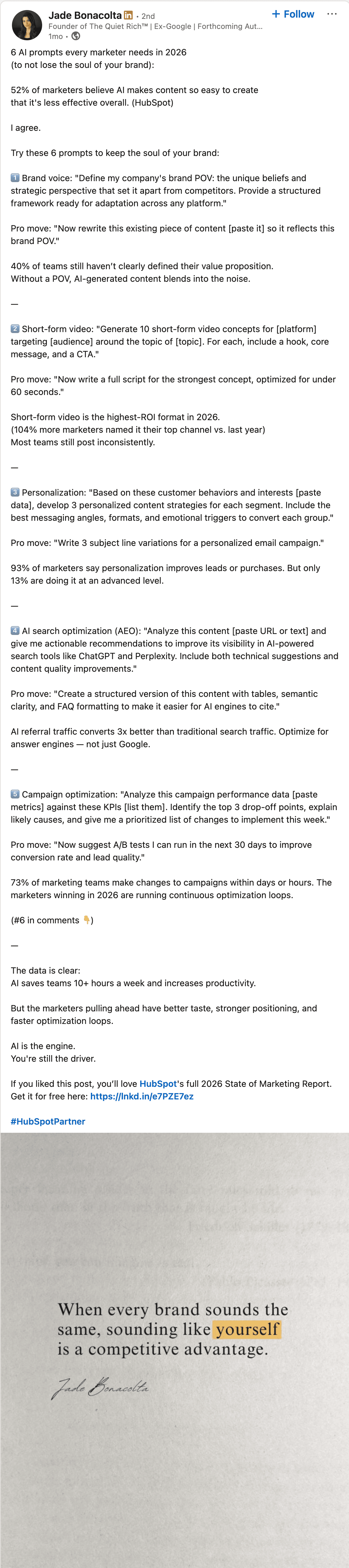
You can observe this in how HubSpot approaches creator-led distribution. Instead of relying only on large creators, they consistently collaborate with niche operators, marketers, founders, and revenue leaders who already speak to their target audience.
This works because the audience context is already built. The content does not feel like promotion, but like education, driving stronger engagement and more qualified inbound compared to broader, reach-focused campaigns.
Look for Content Alignment, Not Just Category Fit
Most brands choose creators based on industry alignment, assuming that is enough. But real alignment comes from content, what the creator consistently talks about and how their audience engages with those topics.
If your product fits naturally into those conversations, the content feels seamless and credible. If not, it feels forced, no matter how good the creator is. Strong alignment turns distribution into a continuation of trust, not an interruption.
Start Conversations, Not Campaigns
Outreach is often treated as a transaction in a pitch, a deliverable, and a rate. But the best creator partnerships do not start that way. They start with curiosity and context.
When you approach creators as collaborators rather than channels, the dynamic shifts. You are not buying a post, you are co-creating distribution. This leads to better responses, stronger content, and partnerships that compound over time.
Week 3: Running Experiments That Actually Teach You Something
Think in Experiments, Not Campaigns
Most teams approach creator-led distribution like a campaign, with high investment, a single direction, and immediate expectations. This limits learning and increases the risk of failure.
An experimental approach spreads smaller bets across creators and angles, allowing patterns to emerge. The goal is not immediate scale, but clarity. Once you understand what works, scaling becomes far more predictable.
Give Context, Not Control
Over-controlling content is one of the fastest ways to kill performance. Scripts, rigid messaging, and strict guidelines strip away authenticity, making content feel like an ad.
Creators understand how to communicate with their audience in a way that resonates. When you give them context and intent rather than control, they translate your message into something natural, which drives engagement and action.
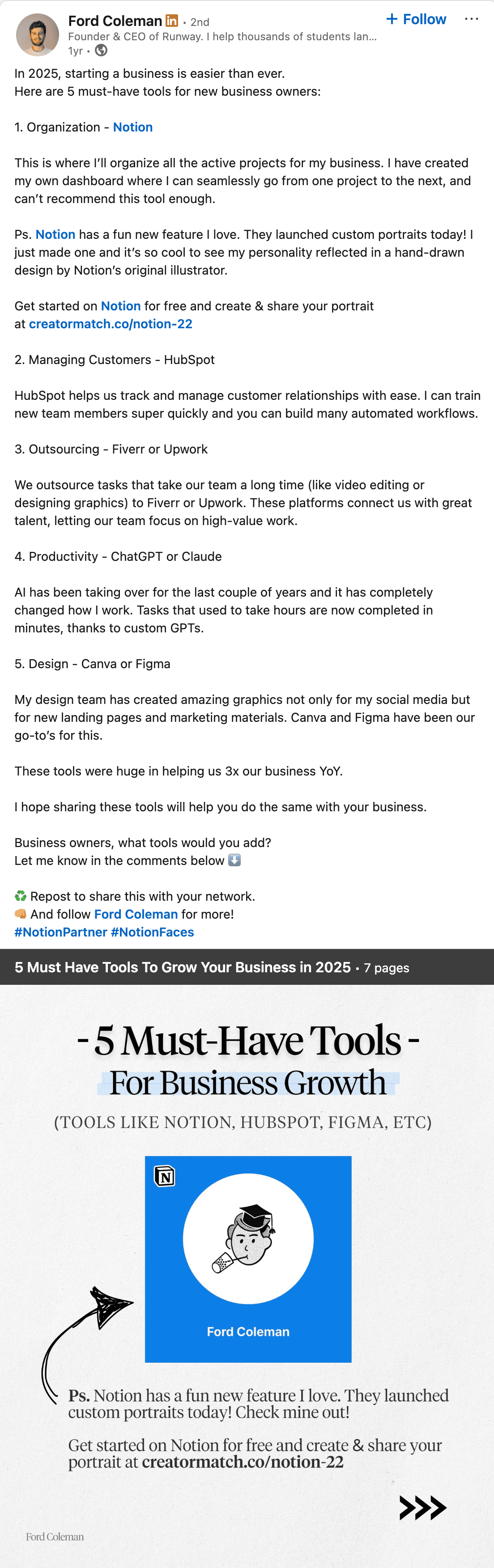
You can see this pattern clearly in how Notion works with creators. Instead of pushing structured messaging, they allow creators to share how they personally use Notion in their workflows.
This works because the product is embedded inside real use cases like setup tours, systems, and workflows, making the content feel native and relatable. As a result, it consistently drives saves, shares, and long-term product adoption.
Test Different Angles, Not Just Different Creators
Most teams assume performance differences come from creators, but messaging plays an equally important role. The same creator can produce very different results depending on how the idea is framed.
Testing different angles, problem-led, insight-driven, or story-based, helps you understand what resonates with your audience. This not only improves performance but also gives you clarity on how to position your product moving forward.
Week 4: Measuring What Actually Matters
Shift from Impressions to Intent
Vanity metrics are easy to track, which is why they are often overvalued. But high reach does not necessarily translate into meaningful outcomes.
What matters are intent signals like profile visits, thoughtful comments, and inbound messages. These indicate real interest and are far more predictive of conversion than passive engagement metrics.
Track at the Creator Level
Looking at aggregated results hides important insights. It flattens performance differences and makes it harder to identify what is actually working.
Tracking performance at the creator level helps you see patterns that drive engagement, which angles work, and where intent is strongest. This clarity is what allows you to scale with confidence.
You can observe this in how Figma builds creator relationships. Instead of spreading efforts across too many creators, they consistently work with those who already drive strong engagement within design and product communities.
This works because repeated exposure builds familiarity. Over time, creators become trusted distribution channels, reinforcing recall and driving stronger engagement compared to one-off collaborations.
Be Patient with the Outcome
Creator-led distribution rarely delivers immediate results, especially in B2B environments where decision-making takes time. People do not convert on the first touch; they observe, engage, and return later.
What you are building is familiarity and trust. The first interaction may not convert, but it sets the foundation for future actions. Teams that understand this timeline are the ones that see long-term success.
After 30 Days: What You Should Know
After 30 days, the goal is not scale, it is clarity. You should have a clear understanding of which creators drive meaningful engagement, which content angles resonate, and whether this channel is worth investing in further.
If that clarity is missing, the issue is rarely the channel itself. It usually comes down to how the test was structured, what was measured, and whether the right signals were prioritized.
What We See Across High-Performing Creator Strategies
Across companies that successfully use creator-led distribution, a few patterns show up consistently.
They prioritize relevance over reach, even if it means smaller audiences. They work with the same creators repeatedly instead of treating every collaboration as a one-off. And most importantly, they treat creators as distribution partners, not just content channels.
These patterns are what turn creator-led distribution from an experiment into a scalable growth channel.
Where Bannermen Fits In
Executing this manually can quickly become complex. From finding the right creators to managing outreach and tracking performance, most teams either oversimplify the process or abandon it too early.
Bannermen exists to bring structure to this.
We help you identify the right niche creators and experts, run high-signal experiments, and focus on stories that actually move attention into trust, so you can go from testing to building a repeatable distribution system with confidence.
Why This Approach Works
If you are building for a niche audience, this approach saves you weeks of guesswork.
Instead of relying on assumptions, you start seeing:
- What your audience actually cares about
- How they talk about their problems
- Which voices they already trust
- What kind of stories drive real engagement
Final Thought
Creator-led distribution is not something you try once. It is something you build into your growth system.
The companies that treat it this way do not just see better results; they turn it into a repeatable, scalable channel.
If you’ve built something valuable but struggle to get the right people to notice or trust it, this approach changes how distribution works. Instead of guessing, you start seeing what actually resonates what builds trust, what drives real conversations, and which voices your audience already listens to.
There’s no random outreach or scattered experiments, just a more intentional way of building distribution. We built this so you don’t have to rely only on ads or spend months figuring things out through trial and error.
Next step
We built this so you do not have to rely only on ads or figure out distribution through trial and error.
At Bannermen, we help B2B teams design and run creator-led distribution systems end-to-end, focused not just on visibility, but credibility and pipeline.
If you are a founder of a high-growth AI startup, we would love to have a word with you. You can also reach us at anjali@getbannermen.com.
Book a call